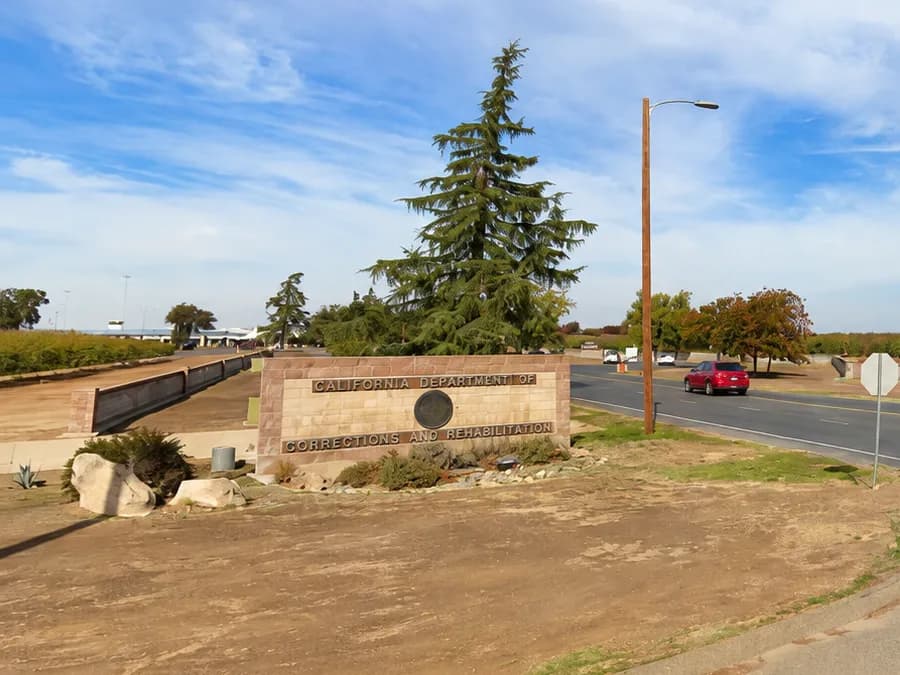
More than 130 women have sued the State of California and the California Department of Corrections and Rehabilitation over sexual abuse by prison staff at the California Institution for Women (CIW) in Chino and the Central California Women's Facility (CCWF) in Chowchilla. Filed in Sacramento Superior Court as Jane Roe et al. v. State of California, California Department of Corrections and Rehabilitation et al. (Case No. 23CV013894), the complaint describes abuse that was not isolated to one officer or one unit, but widespread across the facilities — the product of a power dynamic in which staff controlled every part of an incarcerated woman's day and faced almost no check on how they used it.
The complaint alleges CIW and CCWF lacked hiring policies capable of keeping sexual predators out of positions of total control over inmates; gave staff unrestricted, unsupervised intimate access to the women in their custody; failed to train security staff to protect people in custody from sexual abuse; and met known misconduct with willful ignorance and absent supervision. The accounts include women subjected to more than 40 separate instances of rape or sexual misconduct by the same guard, forced oral copulation and digital penetration, assaults inside and outside cells, groping, and relentless lewd comments and harassment. These claims do not depend on the officer ever having been arrested, charged, or convicted.
If you were sexually abused by staff while incarcerated in a California women's prison, you may be able to seek accountability from the state that put you there — and recognition of what was done to you.

Every detail you share through this case review — your story, the institution where the abuse occurred, any grievances, records, or treatment history you have, and how the abuse affected you — stays between you and our intake team. We do not sell, rent, or share your information with third parties, and your participation is never made public. Survivors in the pending litigation are filing under “Jane Roe” pseudonyms to protect their identities.
Damages vary by case, and every survivor's situation is different. Common categories of damages in custodial sexual abuse cases like these include:
Therapy, trauma-focused counseling, psychiatric care, inpatient stays, medication, and follow-up treatment for PTSD, depression, anxiety, substance-use disorders, and related conditions tied to sexual abuse suffered while in the custody of a state correctional facility.
Long-term therapy, ongoing psychiatric treatment, residential or intensive outpatient programs, and the cost of recovery that often continues for years — and sometimes decades — after release.
Treatment for injuries caused by assault, gynecological and reproductive care, testing and treatment for sexually transmitted infections, and any care made necessary by abuse or by the medical attention that was withheld after it.
Wages lost to time off work, interrupted education and job training, and the lasting reduction in earning capacity that can follow trauma sustained in custody — on top of the reentry disadvantages incarceration already creates.
Emotional distress, humiliation, loss of trust, and the diminished quality of life caused by sexual abuse in a facility you had no ability to leave, report from safely, or protect yourself inside.
Harm caused by what followed a report: disciplinary write-ups, segregation or solitary placement, transfers, lost visitation or work assignments, and the effect those consequences had on classification, programming, and release.
Damages available to spouses and family members for the strain that the lasting effects of custodial sexual abuse place on close relationships.
For families who lost a loved one to suicide or substance-use death connected to the trauma: funeral and burial expenses, loss of future support, and loss of society and companionship.
In cases like these, the State of California and the California Department of Corrections and Rehabilitation may be held accountable for negligent hiring and retention, failure to supervise staff who were given unrestricted intimate access to inmates, failure to train officers to prevent sexual abuse in custody, failure to protect people the state chose to confine, ignoring or burying grievances, and allowing known abusers to keep their posts. California sets strict — and, for claims against state agencies, sometimes very short — deadlines that turn on when the abuse occurred and when the resulting injury was discovered, so the only reliable way to know whether your claim is still open is to have it reviewed.
See if You QualifyAt ACTS Law, we represent women who were sexually abused by staff while incarcerated in California's state prisons — including the California Institution for Women and the Central California Women's Facility. Our attorneys work closely with each client, with the discretion and care these cases demand, to pursue accountability from the agencies that held them in custody and failed to keep them safe.
Our attorneys handle complex civil cases involving sexual abuse in institutional settings — state prisons, jails, and detention facilities where staff hold total authority over the people in their custody. The team reviewing your case has worked in this category before.
We come ready to take cases through to trial when defendants resist a fair resolution. The credible threat of trial is what drives settlements — and it's a posture not every firm can credibly hold.
You pay nothing up front and nothing during the case. Fees only apply if we recover compensation on your behalf.
This is an advertisement of ACTS Law to investigate potential claims related to clergy misconduct, church-related harm, and religious institution accountability. This webpage’s content is provided for informational purposes only by ACTS Law, located at 200 Culver Blvd. Suite 208, Playa Del Rey, CA 90293, United States. Visit us at actslaw.com. This site contains general information that may not be up to date, assumes findings of fact, and is for illustrative purposes only. A more detailed analysis of your particular situation would be required to obtain a better estimate of what you may be entitled to. There is no guarantee that a Court or Arbitrator would rule in your favor. This does not create an attorney-client relationship. It is not intended to provide legal advice. For legal advice, you will need to consult an attorney at ACTS Law. Past results are not indicative of future results and do not guarantee any particular outcome.